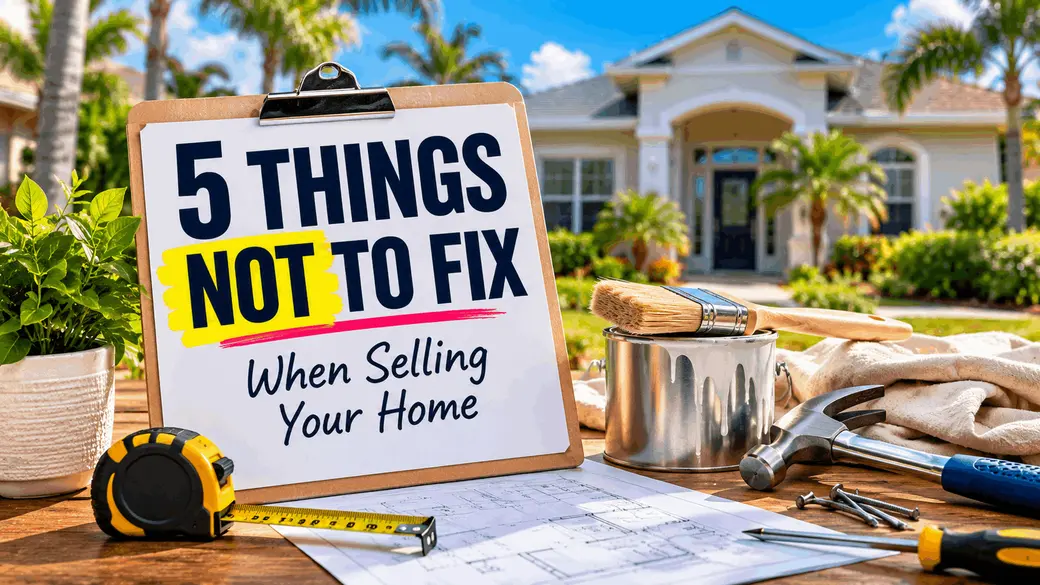
5 Things NOT to Fix When Selling Your Home
The Short Answer
Before selling your home, don't automatically spend money remodeling the kitchen or bathrooms, replacing dated flooring, installing a new roof or air-conditioning system, renovating rooms that could simply be staged, or redesigning the landscaping.
Some of those improvements might be worthwhile. Others could cost you thousands without adding enough value to justify the expense. The difference comes down to your home's condition, what buyers expect, and whether any problems could affect the sale.
If you're getting ready to sell your house, you probably already have a list going.
The kitchen. The floors. The roof. The landscaping.
And you're wondering how much of it you need to tackle before putting the house on the market.
But what if you spend $30,000 getting your home ready, and buyers aren't willing to pay you any more for it?
That's exactly what I want to help you avoid.
I'm Tina Veltri, a Realtor here in Brevard County on Florida's Space Coast. One of the things I help homeowners figure out is what really needs to be done before selling—and what doesn't.
Before You Start Fixing Things, Look at the Whole House
Here's where I want you to start.
Before spending money on improvements, we need to understand what we're dealing with.
Is the house generally well maintained? Are there problems with the roof, air conditioning, plumbing, or electrical system? How does the home compare with other properties buyers can choose from?
And just as importantly, how much money do you have available to prepare the home?
Because if your roof has a significant problem, replacing perfectly good flooring may not be the best use of your budget.
This is why I prefer to look at the property before a homeowner starts making major decisions.
Preparing a home for sale is only one part of the process. If you're thinking about selling, my Selling a Home on Florida's Space Coast page explains how I approach preparation, pricing, marketing, and the decisions that come before listing.
Let's go through five improvements I wouldn't automatically recommend.
1. Don't Automatically Remodel Your Kitchen or Bathrooms
I hear this all the time.
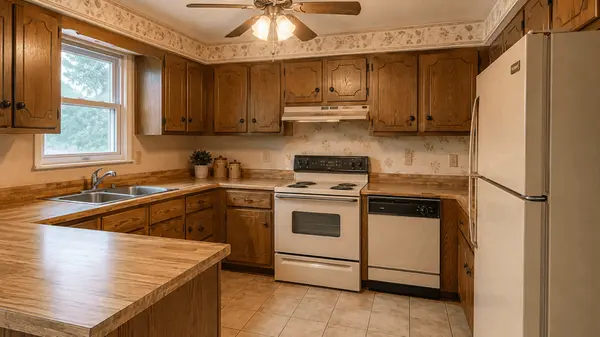
"My kitchen is dated. I probably need to redo it before I sell."
Well, maybe. But let's look at what that really means.
Imagine spending $30,000 remodeling your kitchen. You choose beautiful cabinets, new countertops, and updated appliances. The house looks wonderful.
But what if buyers are only willing to pay $15,000 more because of that renovation?
You spent $30,000 to potentially increase the sale price by $15,000.
That's not the result we're looking for.
Now, I'm not saying kitchen and bathroom updates are never worthwhile. Some homes absolutely benefit from them, particularly when buyers expect certain finishes at a particular price point.
But a twenty-year-old kitchen isn't automatically a bad kitchen.
If the cabinets are functional, the countertops are in good condition, and the room is clean and well maintained, we may be able to improve its presentation without tearing everything out.
Before remodeling, I want to compare your home with the competition and determine whether the kitchen is actually holding it back.
2. Don't Replace Flooring Just Because It's Dated
There's a big difference between flooring that's dated and flooring that's defective.
Maybe you've lived with the same tile for twenty years. You're tired of looking at it, and you assume buyers will feel the same way.
They might prefer something newer. But that doesn't automatically mean you should spend thousands replacing it.
Now, if the flooring is buckling, badly stained, damaged, or has an odor, that's a different conversation.
And sometimes the problem isn't even the condition.
You might have tile in one room, laminate in another, and carpet in the bedrooms. Depending on the layout, all those transitions can make the home feel disconnected.
In that situation, more consistent flooring could make a meaningful difference.
But if your flooring is clean, functional, and works with the home, I may recommend leaving it alone.
I'd rather see you keep that money than spend it on an improvement buyers may not value enough to justify the cost.
3. Don't Replace an Older Roof or Major System Just Because It's Old
This one is especially important here in Florida.
You've probably heard someone say, "Don't replace the roof. Let the buyer deal with it."
Sometimes that may be reasonable.
But sometimes it's terrible advice.
How old is the roof? What condition is it in? Does it have any problems that could affect insurance?
I had a home that sat on the market for a long time because of its roof.
The roof needed replacement, and the property couldn't pass a four-point inspection. Buyers were having trouble obtaining homeowners insurance.
Once the seller finally replaced the roof, the house sold.
In that situation, avoiding the repair wasn't saving the homeowner money. It was getting in the way of selling the house.
Why Florida Sellers Need to Think About Insurance
A four-point inspection generally looks at four major systems:
-
Roof
-
Electrical
-
Plumbing
-
Heating and air conditioning
Insurance companies may request this inspection, particularly for older homes, when determining whether they will insure a property.
Florida law places certain restrictions on homeowners insurance decisions based solely on roof age. However, a roof's condition, remaining useful life, inspection findings, and an insurer's underwriting requirements can still affect whether coverage is available.
An older roof doesn't automatically need replacing, but age alone doesn't tell us whether the property will be insurable.
The actual condition matters.
The same goes for air conditioning, plumbing, and electrical systems.
An older system that's working properly is not automatically something you need to replace. A system with significant defects that interfere with insurance or a buyer's ability to complete the purchase is another matter.
I recently sat down with Bill Daniel of Hound Dog Inspections to discuss full home inspections, four-point inspections, wind mitigation inspections, and the problems that deserve the most attention. You can read our conversation in Home Inspections in Florida: What Buyers Need to Know Before Closing.
For some older homes, I may recommend a pre-listing inspection so we can identify potential issues before buyers do.
Not every house needs one.
But I'd much rather understand a serious problem early than have it derail a sale after we've found a buyer.
4. Don't Renovate Something That Better Presentation Can Solve
This is one of my favorite parts of preparing a home for sale.
Because sometimes you don't have a house problem.
You have a presentation problem.
You've been living in your house for years. You're comfortable with your furniture and where everything belongs.
But when I walk through, I'm looking at the rooms through a buyer's eyes.
Maybe the family room feels small.
Do we need to renovate it?
Or do we simply need to remove a few pieces of furniture?
I've worked with homeowners where editing and rearranging furniture completely changed how the rooms felt.
In one home, a piece of furniture was blocking a sliding glass door. Moving it opened up the room, brought attention back to the natural light, and helped buyers appreciate the view outside.
We didn't remodel anything.
We didn't spend thousands of dollars.
We simply made the space easier for buyers to see and appreciate.
This is why I believe staging is such an important part of preparing a home for sale. It's not necessarily about buying new furniture or spending a lot of money. It's about helping buyers see the space, appreciate its features, and imagine living there.
I explain more about this in my home staging article.
Sometimes that means removing oversized furniture, clearing crowded surfaces, or changing how a room is arranged.
My background in visual presentation and staging is also an important part of why homeowners choose to work with me when preparing their properties for sale.
And that's why I don't want homeowners making expensive renovation decisions before we've looked at what thoughtful presentation could accomplish.
5. Don't Spend Thousands on Landscaping Just Because You're Selling
Yes, curb appeal matters.
Buyers start forming an impression before they ever walk through your front door.
But that doesn't mean you need to redesign the entire yard.
Especially here on the Space Coast, where landscaping grows quickly, basic maintenance can make a noticeable difference.
Sometimes all we need to do is trim overgrown shrubs, clean out the beds, pressure wash appropriate surfaces, put down fresh mulch, and make the entrance welcoming.
And stop.
I'm not suggesting ignoring damaged walkways, drainage issues, or trees that present a safety concern. Those deserve attention.
But you don't necessarily need elaborate new landscaping.
You want buyers to pull up, see a well-maintained property, and feel good about walking inside.
So What Should You Actually Fix Before Selling?
Here's the order I would think about it.
First, we look for anything that could create a significant problem during inspections, affect insurance or financing, or make buyers uncomfortable with the property's condition.
Next, we look at basic maintenance and presentation. Does the house feel clean, cared for, and easy to walk through? Are there relatively simple improvements that would make a noticeable difference?
Then we evaluate the more expensive updates.
A new kitchen. New flooring. Major landscaping.
Those decisions come after we understand the home, the competition, and what buyers are likely to pay.
Because spending money and adding value are not always the same thing.
And sometimes the right decision is to sell the property in its current condition, with a price and marketing strategy that reflect what buyers are purchasing.
There isn't one preparation checklist that works for every house.
If you're preparing to sell a parent's home or an inherited property, those decisions may involve additional considerations. I've written more about why families should evaluate a parent's home before making repairs.
Selling a Parent’s Home? Don’t Make Repairs Until You Do This
Free Seller Guide: Plan Before You Spend
Thinking About Selling Your Home?
Before you start making repairs or spending money on improvements, get a better understanding of the selling process.
Download my free Selling Your Home Strategic Guide and start planning your next move with confidence.
Thinking About Selling Your Home on Florida's Space Coast?
If you're considering selling in the next six months—or even the next year—I'd rather talk with you before you start spending money.
We can walk through your home, evaluate its condition, look at what buyers in your price range expect, and develop a preparation strategy that makes sense for your property and your goals.
You don't have to make your home perfect before calling me.
You just need a plan.
Visit my Selling a Home on Florida's Space Coast page to learn how I help homeowners prepare, price, market, and sell their properties.
If you're wondering what your home might be worth, you can also request a Personalized Home Valuation.
And if you'd rather discuss your options directly, schedule a 30-minute Personalized Consultation with me.
Related Articles
Selling a Parent's Home? Don't Make Repairs Until You Do This
If you're helping a parent or handling an inherited property, the repair decision can be even more complicated. Learn why I recommend evaluating the property before spending money.
Selling a Parent’s Home? Don’t Make Repairs Until You Do This
Selling a Parent's Home in Brevard County: What Families Need to Know
See how the right preparation and selling strategy can vary dramatically depending on the home and the family's circumstances.
Frequently Asked Questions
What repairs are worth making before selling a house?
Start with repairs that could affect safety, inspections, insurance, financing, or buyers' confidence in the property. Then consider maintenance and presentation improvements. Major renovations should be evaluated against their cost and likely effect on the sale.
Should I remodel my kitchen before selling my house?
Not automatically. A dated but functional kitchen may be acceptable to buyers, particularly when the home is priced appropriately. Compare the kitchen with competing properties before committing to an expensive renovation.
Should I replace my roof before selling my house in Florida?
An older roof doesn't automatically need replacement. Its condition, remaining useful life, inspection results, and potential effect on insurance matter. It's worth investigating those issues before deciding whether to replace it or sell the home with the existing roof.
Is it better to sell a house as-is or make repairs?
It depends on the property's condition, the cost of repairs, your timeline, and the likely buyer pool. Some homes can be sold successfully as-is. Others may benefit from addressing a particular issue before listing.
How early should I talk to a Realtor before selling?
Six months to a year before a planned sale is not too early. An early conversation can help you avoid unnecessary expenses and plan any work that actually needs to be completed.
About Tina Veltri

I'm Tina Veltri, a Realtor with LPT Realty here on Florida's Space Coast. I help homeowners and families make informed real estate decisions, with a special focus on downsizing, selling longtime homes, and navigating the sale of a parent's home or inherited property.
Whether you're preparing a home you've owned for decades, helping a parent make a move, managing an inherited property from out of state, or looking for the right home for your next chapter, I help you look at the whole picture before making decisions.
From evaluating a property's condition and deciding what to repair to coordinating vendors, preparing the home for sale, and developing a pricing and marketing strategy, I provide practical guidance and hands-on support throughout the process.
With more than eight years of real estate experience, I hold the Graduate, REALTOR® Institute (GRI) and Real Estate Negotiation Expert (RENE) designations. My background in visual presentation, education, and staging, along with my commitment to staying current with Florida real estate changes, shapes the guidance I provide.
I grew up on Florida's Space Coast and serve Melbourne and communities throughout Brevard County.
Tina Veltri | REALTOR® | LPT Realty
Florida's Space Coast | Brevard County
321-341-6541 | tina@tinaveltri.com | tinaveltri.com
Let's Talk About Your Next Move
Whether you're preparing to sell, considering a move, or navigating a family property decision, I'd be happy to help you evaluate your options and develop a plan.
Schedule a 30-Minute Personalized Consultation to get started.
Want to learn more about my experience and approach? Visit Why Work With Tina.
Buying or selling outside Florida's Space Coast? I can also help you connect with a real estate agent in another Florida market or elsewhere in the country through my Referral Network.
Categories
Recent Posts








Raised on Florida’s Space Coast, Tina Veltri brings local insight and a hands-on approach to every move. Buy | Build | Sell | Relocate with Confidence — and experience strategic staging, smart pricing, and proven results.